
Average software engineer salary in India by city (2026 data)
A city-by-city breakdown of software engineer salaries in India in 2026, covering Bangalore, Hyderabad, Pune, Mumbai, Chennai, and Delhi NCR.

Zaprill Team
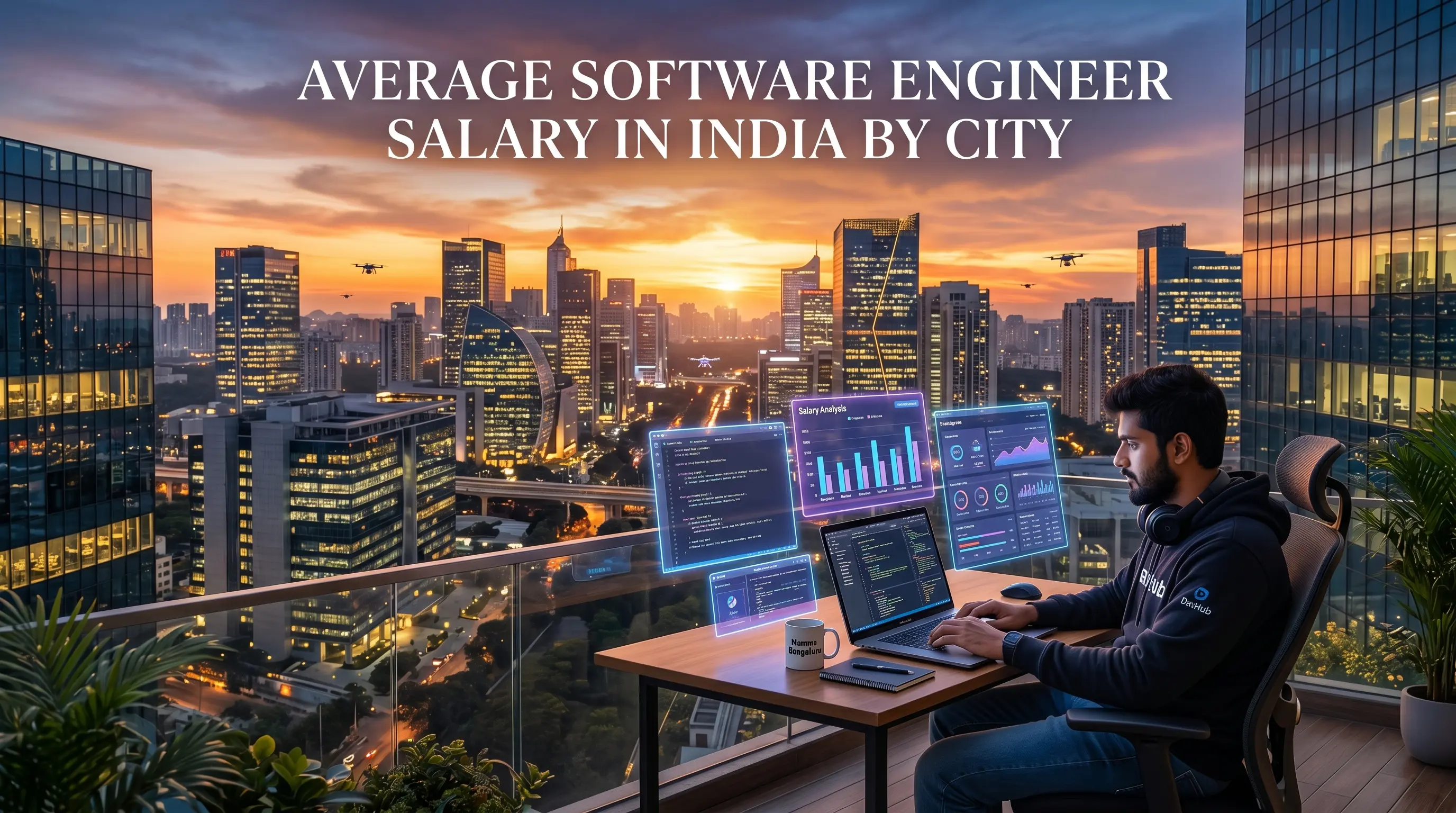
The Tier-1 Tech Hubs: Bangalore, Hyderabad, and Pune
When discussing software engineering salaries in India, it's impossible not to start with Bangalore. Often officially dubbed the Silicon Valley of India, Bangalore consistently commands the highest overall compensation packages across almost all experience levels, from freshers to principal engineers. This is heavily driven by a massive, concentrated ecosystem of global capability centers (GCCs), heavily funded unicorns, and established multinational tech giants. The fierce, relentless competition for top-tier talent here leads to significant, localized salary inflation, particularly for specialized, high-demand roles in Artificial Intelligence, complex Data Engineering, and distributed Cloud Architecture. If you want the highest raw CTC in India, Bangalore is still the undeniable leader.
However, Hyderabad has rapidly and aggressively emerged as a formidable challenger to Bangalore's dominance. Fueled by massive, sustained infrastructural investments from global giants like Microsoft, Amazon, Google, and Apple, the demand for senior engineers in Hyderabad has skyrocketed over the past five years. While the median base salary might still be slightly lower than Bangalore's absolute peak, the overall cost of living—particularly real estate, daily commute expenses, and rent—is considerably lower. When rigorously factoring in this cost of living difference, the 'real income' or true purchasing power for a software engineer in Hyderabad often significantly surpasses that of their direct peers working in Bangalore.
Pune holds a unique, highly stable position in the Indian tech ecosystem. Historically heavily dominated by massive IT services firms, Pune has successfully transitioned into a major hub for enterprise software products, deep-tech startups, and fintech infrastructure. Salaries in Pune are generally very strong, sitting comfortably in the upper tier of Indian cities. Importantly, the city offers a much more balanced, less chaotic lifestyle and a significantly lower cost of living compared to the intense grind of Mumbai or Bangalore. This makes Pune highly attractive for mid-career professionals who are looking to maximize their long-term savings rate while still maintaining access to excellent, high-growth career opportunities.
The High-Cost Metros: Mumbai and Delhi NCR
Mumbai is the undeniable financial capital of India, and its highly specific tech salary landscape sharply reflects that reality. Compensation for software engineers in Mumbai is heavily, almost exclusively skewed toward FinTech startups, algorithmic trading firms, massive banking conglomerates, and financial services infrastructure. While base salaries are exceptionally high—often directly rivaling or exceeding Bangalore's top percentile—the exorbitant, globally-ranked cost of real estate significantly and painfully impacts the standard of living. Engineers in Mumbai rightfully and frequently demand a substantial 'city premium' just to offset the high rent and the notoriously challenging daily commute, making it a very expensive, high-friction location for early-stage startups to scale their engineering teams.
The massive Delhi National Capital Region (NCR), specifically focusing on Gurgaon and Noida, represents an incredibly diverse, rapidly scaling tech market. Gurgaon has firmly established itself as a major hub for aggressive unicorn startups (especially in the hyper-competitive e-commerce, food delivery, and logistics sectors) and global management consulting firms building out tech arms. Salaries in Gurgaon are highly competitive, particularly for aggressive product engineers and senior data scientists. Noida, while historically dominated by massive IT service campuses, is increasingly attracting product companies seeking slightly lower operational costs. The overall cost of living in NCR is high, but it generally offers much better, more modern physical infrastructure and diverse housing options than the extreme density of Mumbai.
The Strategic Rise of Tier-2 Hubs
Chennai has a deep-rooted, highly respected history in the Indian IT sector, traditionally known globally as an absolute stronghold for IT services and massive SaaS (Software as a Service) companies like Zoho and Freshworks. Salaries in Chennai tend to be slightly more conservative and structured than the aggressive startup bidding wars seen in Bangalore or Gurgaon, but the city offers a significantly lower cost of living and a very stable, long-term career environment. For engineers working in specialized, high-margin SaaS product development, Chennai remains a highly lucrative and culturally attractive destination.
Furthermore, we are currently witnessing the rapid, unprecedented rise of Tier-2 tech hubs like Kochi, Trivandrum, Indore, Chandigarh, and Ahmedabad. Driven largely by the permanent normalization of remote and hybrid work models post-pandemic, major companies are increasingly setting up dedicated satellite offices or actively hiring talent directly in these cities to systematically manage and reduce their operational costs. While the absolute headline base salaries in these Tier-2 cities are undeniably lower than in the major Tier-1 metros, the exceptional quality of life, minimal commute times, and exceptionally low living expenses often result in a much higher discretionary income and savings rate for software engineers.
This increasing geographic diversification means that savvy candidates must carefully and mathematically evaluate job offers not just on the headline CTC number, but on the true, localized purchasing power that specific salary affords in a particular city.
Navigating City Premiums and Remote Adjustments
As the Indian tech market continues to adjust in 2026, deeply understanding 'city premiums' is absolutely crucial for any successful salary negotiation. If a prospective employer firmly requires you to relocate from a comfortable Tier-2 city to an expensive Tier-1 hub like Bangalore or Mumbai, it is entirely appropriate, expected, and necessary to negotiate a substantial, upfront relocation allowance and a significantly higher base salary simply to maintain your current standard of living.
Conversely, if you are aggressively negotiating a fully remote role while comfortably living in a Tier-2 city, you must be mentally prepared for employers to benchmark your final offer against the 'national median' rather than the absolute peak Bangalore rates. Employers are increasingly sophisticated about regional cost variations and will attempt to capture some of that geographic arbitrage for themselves. It is vital to actively prove that your remote output equals or exceeds that of a local worker to justify demanding top-tier pay.
Ultimately, the statistical 'average' salary in any given city is just a rough starting point for your research. Your individual, final compensation will be heavily and disproportionately influenced by your specific, niche tech stack, your proven ability to clearly demonstrate tangible business impact in past roles, and your raw negotiation skills. By deeply understanding the complex geographical nuances of the Indian tech market, you can make highly strategic, data-driven decisions about exactly where to live and work to legally maximize your lifetime earnings and wealth accumulation.

Zaprill Team
Head of Compensation Data
Providing market-leading insights on career strategy, technical compensation, and negotiation.
Recommended for you
More insights to help you navigate your career and market value.

Negotiating Tech Offers in a Buyer's Market: The 2026 Playbook
The hiring market has shifted, but that doesn't mean you can't negotiate. Learn the tactical frameworks to secure a top-tier offer in today's cautious tech climate.

The Hidden Costs of Tech Signing Bonuses: What Recruiters Don't Tell You
A massive signing bonus can look incredibly attractive, but it often hides strict clawbacks, vesting cliffs, and tax traps. Here is what to watch out for.
Product Manager vs Software Engineer salary in India (2026 comparison)
A detailed side-by-side comparison of Product Manager and Software Engineer compensation in India, including base pay, growth trajectory, and which path pays more at each career stage.