
How to negotiate a job offer: a step-by-step guide for professionals
A practical, step-by-step guide to negotiating a job offer confidently — covering timing, framing, counter-offers, and what to do when a company says no.

Zaprill Team
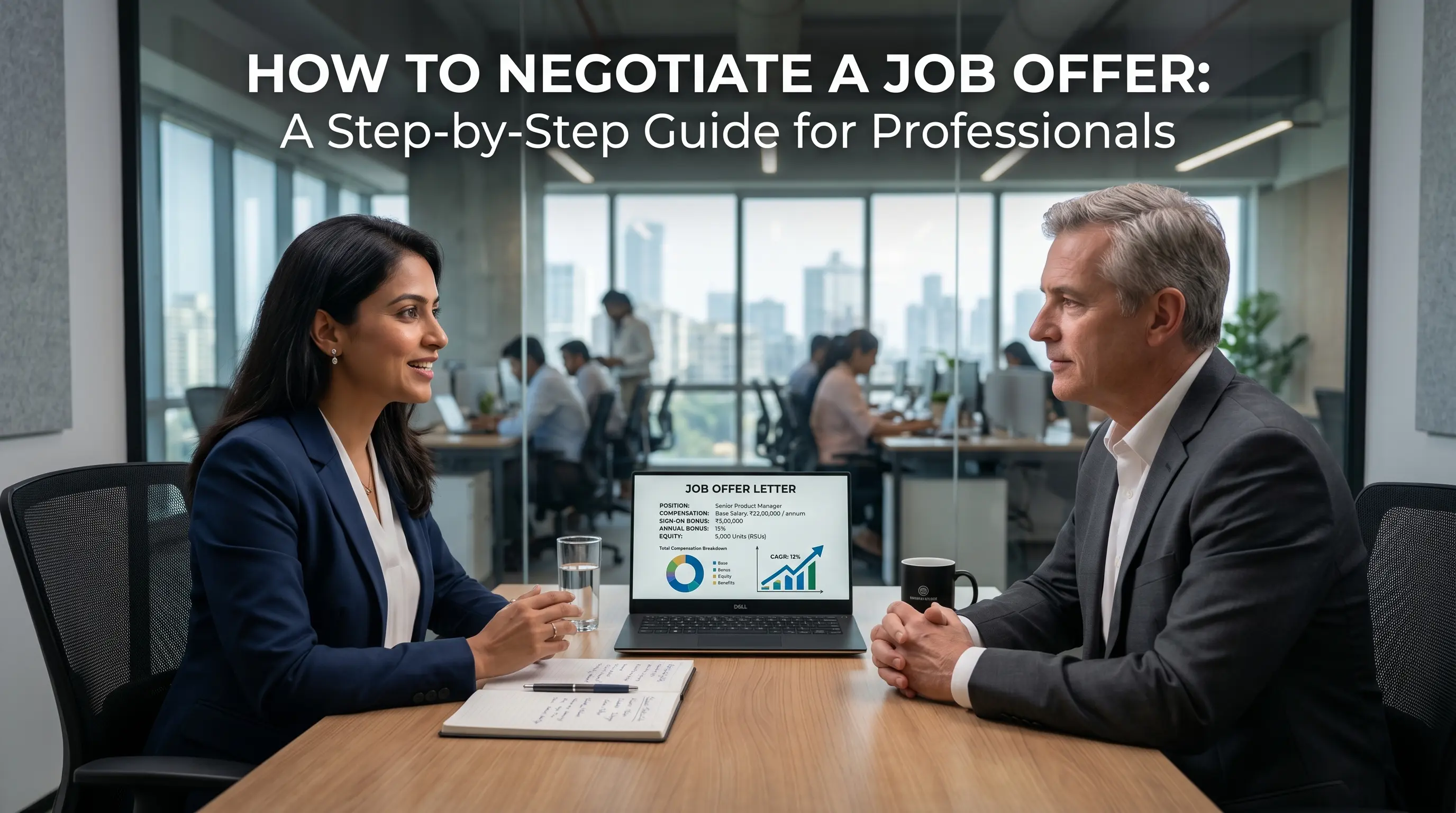
The Psychology of the Negotiation Table
The most critical, defining moment of your entire job search is not the final technical interview or the cultural fit round; it is the brief, highly structured window between receiving an initial offer and officially accepting it. Many candidates, particularly in the Indian tech market, view salary negotiation as a hostile confrontation—a battle where one side wins and the other loses. This mindset is fundamentally flawed and incredibly destructive to your earning potential.
Successful negotiation is not a battle; it is a collaborative business discussion aimed at finding mutual alignment. The moment a company extends an offer, the entire power dynamic fundamentally shifts in your favor. They have spent significant time, money, and resources sourcing, interviewing, and evaluating dozens of candidates. They have decisively concluded that you are the best person to solve their specific business problems. They want you to say yes. They do not want to restart the expensive, grueling hiring process from scratch.
Understanding this psychological leverage is your absolute strongest asset. You are no longer an anxious applicant hoping to be chosen; you are a highly valuable professional finalizing the financial terms of a massive, multi-year business partnership. If you approach the conversation with calm confidence, deep market research, and a collaborative tone, you can significantly increase your compensation without ever alienating your future employer.
The greatest mistake you can make is accepting the very first number presented to you out of fear that the offer will be suddenly rescinded. Unless your counter-offer is wildly, aggressively outside of market reality, or delivered with intense arrogance, reputable companies do not retract offers simply because a candidate politely asks for a fair market adjustment.
Preparation: Anchoring with Deep Market Data
Before you ever pick up the phone to discuss the offer details with a recruiter, you must complete rigorous, data-driven preparation. Walking into a negotiation armed only with a vague 'feeling' that you deserve more money, or citing your high personal living expenses, is a guaranteed strategy for failure. You must build an undeniable, objective business case for why your specific skill set commands a higher market premium.
Your preparation must be highly localized and specifically targeted. Generic data from broad salary aggregators is often too wide to be useful. You need to benchmark yourself against professionals with similar years of experience, holding the exact same title, working in the same city, at companies with similar funding stages or revenue sizes. Actively seek out salary data from recent job postings in transparent jurisdictions, leverage specialized industry compensation reports, and quietly consult with external tech recruiters to understand the current, real-time market rate for your exact profile.
Once you have this robust data, you must determine your exact 'walk-away' number (the absolute minimum you will accept) and your 'target' number (the ideal, high-end market rate you are aiming for). Having these firm numbers clear in your mind before the conversation begins prevents you from making emotional, split-second decisions under pressure when the recruiter starts pushing back.
Remember, your current CTC (Cost to Company) is legally irrelevant to your future market value, even though Indian recruiters aggressively try to anchor negotiations based on it. Your goal is to firmly decouple the conversation from 'percentage hikes over current salary' and forcefully anchor it to 'current market value for the skills I am bringing to the table.'
The Multi-Variable Approach: Looking Beyond Base Pay
A common amateur mistake is focusing the entire, high-stakes negotiation solely on the fixed base salary. While base pay is undeniably crucial because it compounds over your career, a modern tech compensation package is highly complex and multi-variable. If the recruiter firmly claims they have hit the absolute maximum limit of the HR base salary band, the negotiation is not over; it has merely shifted to other lucrative variables.
The joining bonus (or sign-on bonus) is the easiest variable for a company to adjust. It is a one-time cash expense from a different corporate budget bucket that does not permanently disrupt internal salary parity. You can effectively negotiate a large joining bonus to cover money you are leaving on the table at your current job, or simply to bridge the gap if the base salary offer is slightly below your target.
Equity (ESOPs or RSUs) is another massive lever, particularly at high-growth startups or publicly traded tech giants. Negotiating for a larger initial equity grant, a more favorable vesting schedule, or an extended exercise window can literally be worth millions of rupees over the long term. Treat equity negotiations as seriously as cash negotiations.
Finally, you can negotiate powerful non-monetary benefits. This includes a guaranteed fully remote work arrangement, an accelerated performance review timeline (e.g., a guaranteed review after 6 months instead of 12), a specific job title that looks better on your resume, or a dedicated budget for your continued professional development and certifications. By expanding the scope of the negotiation across multiple variables, you give the employer numerous different ways to meet your total value requirements.
The Script: How to Actually Have the Conversation
When the offer is finally extended, your immediate response should be to express genuine enthusiasm and gratitude, followed by a request for time. Say, 'Thank you so much for this offer, I am incredibly excited about the team and the product vision. I would like to take 24 to 48 hours to review the detailed offer letter and the benefits package with my family before getting back to you.' Never negotiate on the spot.
When you return for the negotiation call, use the 'Enthusiasm + Market Data + Request' formula. Start by reiterating your excitement. Then gently introduce the data: 'I have been doing significant research on the current market rate for Senior Backend Engineers in Bangalore with deep Kafka experience.' Finally, make the specific request: 'Based on this specific market data and the technical leadership you are expecting in this role, I would be absolutely thrilled to sign the offer today if we can adjust the base salary to [Your Target Number].'
Use strategic silence. After you state your number, stop talking. The silence will feel incredibly uncomfortable, but you must let the recruiter respond first. Do not immediately backtrack or justify your number further. Let the market data stand on its own.
Expect standard pushback. They will likely say they need to check with the hiring manager or that the budget is tight. Remain calm, professional, and firm. If they come back with a counter-offer that is lower than your target but higher than the initial offer, you have successfully negotiated. At this point, evaluate the entire revised package against your initial 'walk-away' number and make a confident, final decision.

Zaprill Team
Compensation Strategy Team
Providing market-leading insights on career strategy, technical compensation, and negotiation.
Recommended for you
More insights to help you navigate your career and market value.

Negotiating Tech Offers in a Buyer's Market: The 2026 Playbook
The hiring market has shifted, but that doesn't mean you can't negotiate. Learn the tactical frameworks to secure a top-tier offer in today's cautious tech climate.

The Hidden Costs of Tech Signing Bonuses: What Recruiters Don't Tell You
A massive signing bonus can look incredibly attractive, but it often hides strict clawbacks, vesting cliffs, and tax traps. Here is what to watch out for.

How to Answer 'What is Your Expected Salary?' Without Losing Leverage
The expected salary question is a trap. Here is the step-by-step psychological framework to handle it effectively and maximize your offer.