
How to optimize your LinkedIn profile to attract recruiters in 2026
A practical guide to optimizing every section of your LinkedIn profile so recruiters find you, trust you, and reach out with relevant opportunities.

Zaprill Team
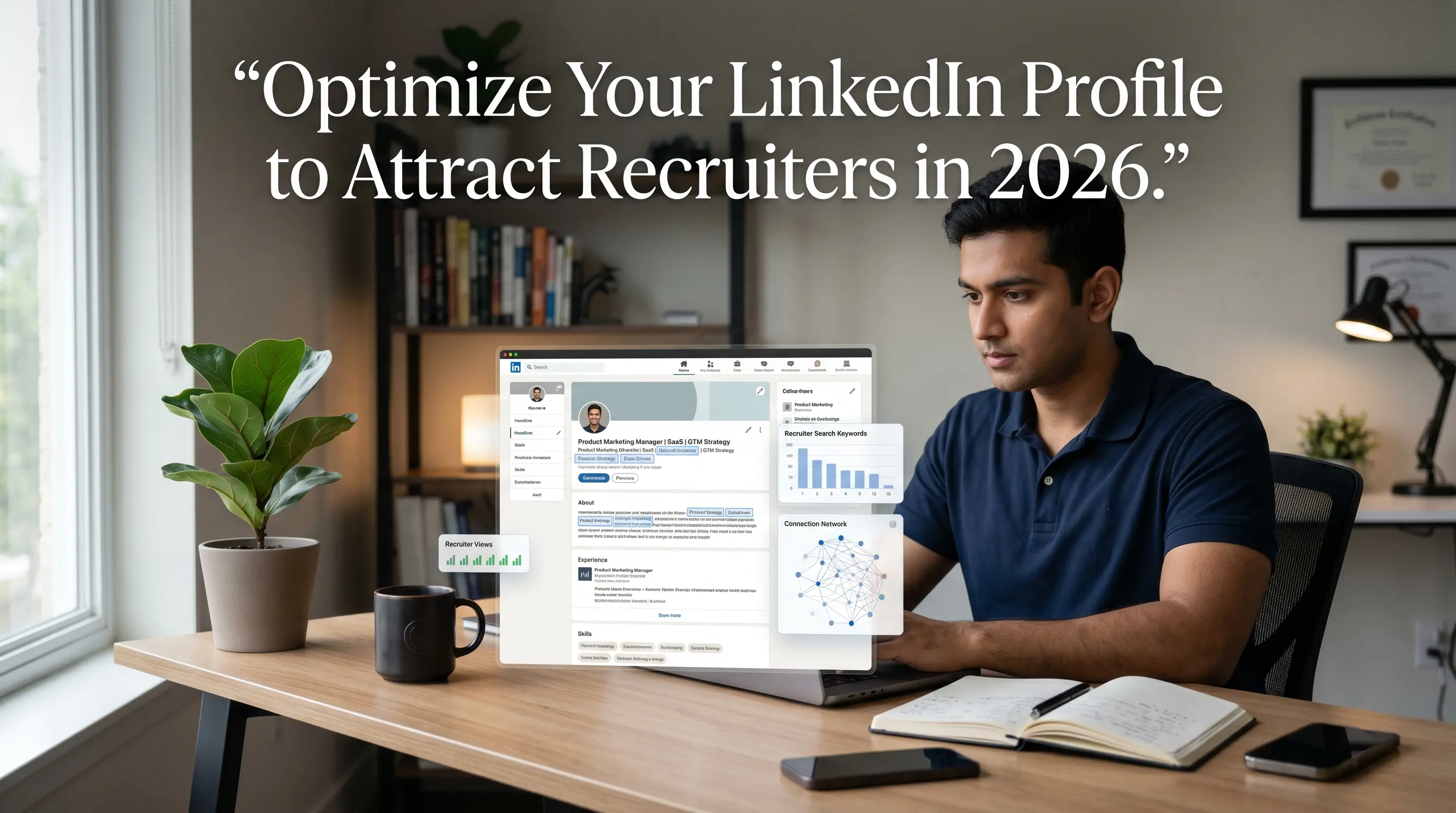
Why LinkedIn is a Search Engine, Not a Resume
The biggest, most detrimental mistake most professionals make on LinkedIn is treating it exactly like a digital, slightly more colorful version of their static PDF resume. They lazily paste in their dry job descriptions, add a semi-professional photo, and passively wait for the incredible job offers to roll in. This fundamental misunderstanding of the platform ensures they remain completely, statistically invisible to the thousands of desperate recruiters actively hunting for top talent every single day.
LinkedIn is absolutely not merely a resume hosting site or a standard social network; it is a massive, highly complex, algorithm-driven search engine. Recruiters do not browse LinkedIn randomly hoping to stumble upon a good profile; they use a very expensive, sophisticated backend enterprise tool called LinkedIn Recruiter to run highly specific, complex Boolean search queries. They actively type in precise combinations of niche skills, exact job titles, specific locations, and target industries.
If your public profile does not contain the exact, specific keywords the recruiter is actively searching for, the backend algorithm will simply not surface your profile, regardless of how brilliant or senior your actual real-world experience might be. Your primary goal on the platform is not just to look impressive to a human reader; your primary, absolute goal is to rank highly in the search algorithm so that a human recruiter actually finds you in the first place.
Actively optimizing your LinkedIn profile is essentially a rigorous exercise in personal Search Engine Optimization (SEO). You must deeply understand what your target audience (recruiters hiring for your ideal role) is constantly searching for, and strategically, naturally place those precise keywords throughout your profile to signal maximum relevance to the algorithm.
The Headline: Your Most Valuable Real Estate
Your LinkedIn headline is unequivocally the most critical piece of real estate on your entire profile. It acts as your personal billboard. It follows your name everywhere—in search results, in the comments section, and in every single connection request you send. By default, LinkedIn automatically sets your headline to your current job title and current company (e.g., 'Software Engineer at TechCorp'). This is a massive, incredibly common wasted opportunity.
A highly optimized, high-converting headline goes far beyond your current internal title. It explicitly and loudly tells the algorithm and the browsing recruiter exactly what you do, what your core technical specialties are, and what unique value you bring to the table. It should be a heavily keyword-rich statement. Instead of just 'Software Engineer', a vastly superior, highly searchable headline is: 'Senior Backend Engineer | Python | AWS | Building Scalable Distributed Systems | Ex-StartupFounder'.
This heavily optimized headline immediately hits multiple high-value, highly searched keywords: 'Senior', 'Backend Engineer', 'Python', 'AWS', and 'Distributed Systems'. When a desperate technical recruiter runs a tight search for a Python developer with deep AWS experience, this specific profile will rank significantly, undeniably higher than a generic profile with a default, boring headline.
Do not ever use cute, vague, or overly clever headlines like 'Code Ninja', 'Tech Enthusiast', 'Growth Hacker', or 'Making the world a better place through code'. Recruiters never, ever search for 'Code Ninjas' in their enterprise database. They search for 'Java Developers' and 'DevOps Engineers'. Use the exact, standard industry terminology that recruiters actually type into their search bars.
The 'About' Section: Narrative and Keyword Density
If your heavily optimized headline successfully gets the recruiter to click on your profile, the 'About' section (your summary) is what ultimately convinces them to send you a direct message or an InMail. However, the About section also plays a massive, critical role in backend search ranking. It is the absolute perfect place to naturally inject a very high density of relevant industry keywords without sounding like a spammy robot.
Do not ever write your summary in the sterile third person ('John is a dedicated professional with ten years of experience...'). Write engagingly in the first person, and tell a compelling, authentic professional narrative. Who are you? What specific, massive problems do you solve for businesses? What are you most passionate about in your technical field? What is your verifiable track record of success?
After telling your brief, compelling narrative, actively create a dedicated 'Core Competencies' or 'Technical Skills' list at the absolute bottom of the summary text block. This is where you unapologetically list every relevant tool, framework, programming language, and project methodology you are proficient in. For example: 'Core Skills: React, Node.js, GraphQL, PostgreSQL, Docker, Kubernetes, CI/CD, Agile Methodology, TDD'.
This explicit 'skill dump' at the bottom of the summary is purely designed for the backend search algorithm. It ensures that no matter which specific, niche variation of a technology a recruiter searches for, your profile has a direct 'hit' for that keyword, dramatically and instantly increasing your overall search visibility across the platform.
Experience, Metrics, and The 'Open to Work' Signal
When meticulously filling out your 'Experience' section, do not simply copy and paste your dry resume bullet points if they are dull and entirely task-oriented. You must aggressively highlight massive, quantifiable business impact. Recruiters rapidly scan experience sections actively looking for hard numbers. Did you directly increase revenue by 20%? Did you successfully reduce server load times by 500ms? Did you effectively manage a cross-functional team of 15? Real numbers jump off the screen and provide instant, undeniable credibility.
Furthermore, ensure that the actual job titles in your experience section are standard and recognizable. If your quirky startup gave you a bizarre internal title like 'Chief Happiness Officer', put the standard industry equivalent in parentheses directly next to it: 'Chief Happiness Officer (HR Director)'. The algorithm only searches for 'HR Director', not 'Chief Happiness Officer'.
Finally, heavily utilize the backend 'Open to Work' settings aggressively. You do not necessarily need to put the highly visible green 'Open to Work' banner on your public profile picture (which some candidates mistakenly feel looks desperate), but you absolutely must turn on the backend setting that silently and securely signals registered recruiters that you are actively open to new opportunities.
When configuring this specific setting, be incredibly precise about the exact job titles, specific locations (including remote options), and contract types you are willing to consider. LinkedIn heavily prioritizes these active, signaled candidates in recruiter search results. By simply toggling this invisible backend switch and fully optimizing your keyword density, you can instantly transform your profile from a static, dead digital resume into a passive, highly effective lead generation machine for your career.

Zaprill Team
Editorial
Providing market-leading insights on career strategy, technical compensation, and negotiation.
Recommended for you
More insights to help you navigate your career and market value.

Navigating Tech Career Progression: IC vs. Engineering Manager in India
Should you stay on the Individual Contributor (IC) track or pivot to Engineering Management (EM)? Here is a data-backed breakdown of the salary, impact, and skill differences in India.

How to Answer 'What is Your Expected Salary?' Without Losing Leverage
The expected salary question is a trap. Here is the step-by-step psychological framework to handle it effectively and maximize your offer.

How to Build a Technical Portfolio That Replaces Your Resume
A paper resume tells recruiters what you did, but a technical portfolio shows them how you build. Learn how to construct a portfolio that forces hiring managers to interview you.