
Navigating Tech Career Progression: IC vs. Engineering Manager in India
Should you stay on the Individual Contributor (IC) track or pivot to Engineering Management (EM)? Here is a data-backed breakdown of the salary, impact, and skill differences in India.
Zaprill Team

The Evolving Indian Tech Landscape: Demystifying Dual-Track Career Progression
For decades, the Indian tech ecosystem operated under a highly rigid, singular career progression model: if you were a software engineer with 6 to 8 years of experience, the only way to increase your salary, secure status, and advance in the corporate structure was to abandon coding and pivot into people management. This historical bias resulted in thousands of exceptional programmers becoming mediocre, unhappy project managers, simply because they were forced to choose between technical passion and financial growth.
Fortunately, the maturity of the Indian tech landscape has changed. With the explosive rise of sophisticated Global Capability Centers (GCCs), product-first scale-ups, and global SaaS companies setting up engineering headquarters in Bangalore, Hyderabad, Pune, and Delhi-NCR, a true 'dual-track' career model has emerged. Modern organizations now recognize that deep technical architectural expertise is just as valuable as people management. Today, you can advance to Senior Staff, Principal, and Distinguished Engineer, earning top-tier compensation packages and exercising massive organizational influence, without ever managing a single direct report. Aligning your career with the premium-paying tech skills of the future allows you to build incredible leverage on either path.
The IC Track (Staff & Principal): Redefining Technical Leadership
Staying on the Individual Contributor (IC) track past the Senior Engineer level is not a passive choice; it is an active commitment to deep, system-level leadership. When you advance to Staff and Principal Engineer, your role shifts from completing isolated Jira tickets to owning broad, cross-functional technical strategies and system architectures.
As a Staff Engineer, your value is measured by technical leverage and scope of influence. You are responsible for identifying long-term architectural risks, designing core infrastructure platforms (such as migrating a legacy monolith to event-driven microservices), establishing engineering excellence standards, and mentoring senior developers. You must think like an economist: how does this technical choice affect our cloud infrastructure bill, developer velocity, and system maintainability over a 3-year horizon? You do not manage people, but you lead them through architectural clarity, deep domain expertise, and a proven track record of shipping highly complex systems.
The EM Track (Engineering Manager): Transitioning from Code to People
Pivoting to the Engineering Management (EM) track is not a promotion; it is a complete, fundamental career change. Many developers make this transition assuming they will continue to write code while managing a small team of engineers. This is a recipe for burnout and failure. As an EM, your primary focus shifts from solving computer bugs to solving human organizational challenges.
Your day-to-day schedule transforms. Instead of long, uninterrupted blocks of deep coding focus, your calendar will be dominated by 1-on-1 meetings, sprint planning sessions, cross-functional alignment calls with product managers and sales leads, and performance evaluation reviews. Your success is no longer judged by your individual commits, but by the health, output, and execution velocity of your entire engineering team. You must learn to recruit exceptional talent, resolve interpersonal conflicts, clear operational blockers, manage delivery timelines, and design career growth plans for your developers. If you enjoy enabling others, building high-performing cultures, and aligning engineering execution with business metrics, this track is exceptionally rewarding.
Compensation Deep-Dive: Base, Bonuses, and Equity Trajectories in India
Let us look at the hard numbers. In the Indian tech market, salaries for Staff Engineers and Engineering Managers are highly comparable, often overlapping within identical compensation bands. However, the structure of their compensation packages and long-term trajectory variables can vary.
At Tier-1 product firms and GCCs in Bangalore, base salaries for both Staff ICs and EMs typically range from ₹35,00,000 to ₹60,00,000, with total compensation (including performance bonuses and equity) frequently exceeding ₹75,00,000. Understanding how these packages differ requires looking at salary variations across Indian cities. For instance, while Bangalore and Gurgaon pay the highest absolute base figures, cities like Pune and Hyderabad offer lower cost-of-living advantages with excellent product equity. EMs often receive bonuses tied directly to organizational metrics and team delivery milestones. ICs, on the other hand, are rewarded with significant equity packages (RSUs/ESOPs) because their technical innovations have a direct, multiplicative impact on company valuation. Recognizing these nuances is critical when understanding equity packaging and evaluating competing job offers.
The 'Pivoting Test': Diagnostic Questions to Find Your Path
To determine which track truly aligns with your innate strengths, values, and energy systems, avoid looking at titles and instead perform a candid self-assessment of your daily preferences. Ask yourself these diagnostic questions.
First, where do you find your energy? If you feel a deep sense of accomplishment after spending four uninterrupted hours debugging a complex multi-threading issue or designing a clean database schema, you belong on the IC track. If you find yourself energized by coaching a junior developer through a career plateau, facilitating a collaborative brainstorming session, or unblocking an alignment issue between engineering and design, management is your calling. Second, how do you prefer to handle control? EMs operate with indirect leverage—they must trust their team to build, focusing instead on shaping the environment. ICs maintain direct, hands-on control over code. Choose the path that matches your technical passion and lifestyle priorities, rather than following outdated corporate expectations.
Zaprill Team
Leadership Advisory Team
Providing market-leading insights on career strategy, technical compensation, and negotiation.
Recommended for you
More insights to help you navigate your career and market value.

How to Answer 'What is Your Expected Salary?' Without Losing Leverage
The expected salary question is a trap. Here is the step-by-step psychological framework to handle it effectively and maximize your offer.
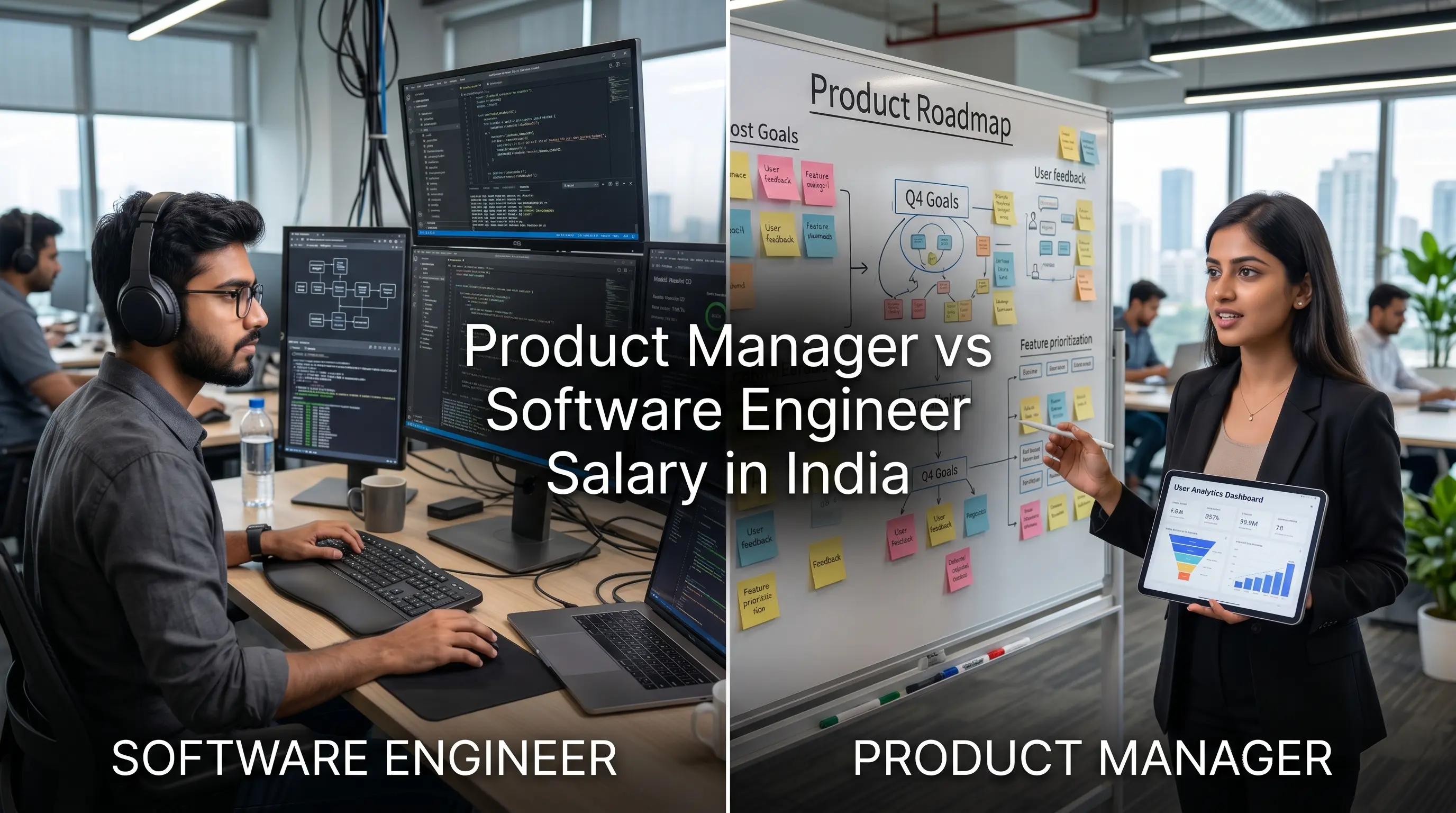
Product Manager vs Software Engineer salary in India (2026 comparison)
A detailed side-by-side comparison of Product Manager and Software Engineer compensation in India, including base pay, growth trajectory, and which path pays more at each career stage.
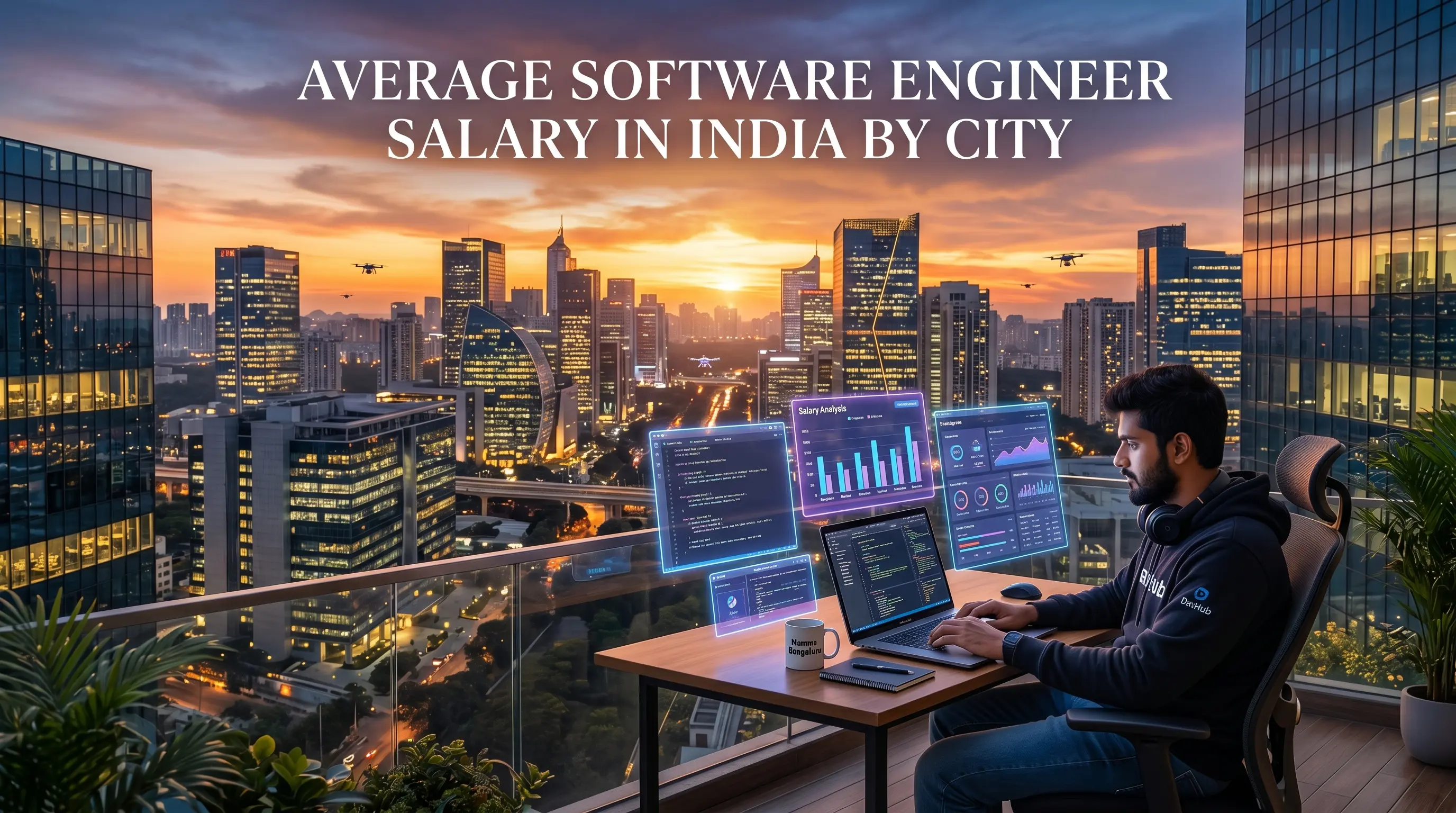
Average software engineer salary in India by city (2026 data)
A city-by-city breakdown of software engineer salaries in India in 2026, covering Bangalore, Hyderabad, Pune, Mumbai, Chennai, and Delhi NCR.