
The 5 skills Indian tech employers are paying a premium for in 2026
The skills showing up in higher-paying Indian tech roles, why employers value them, and how to position them on your resume.

Zaprill Team
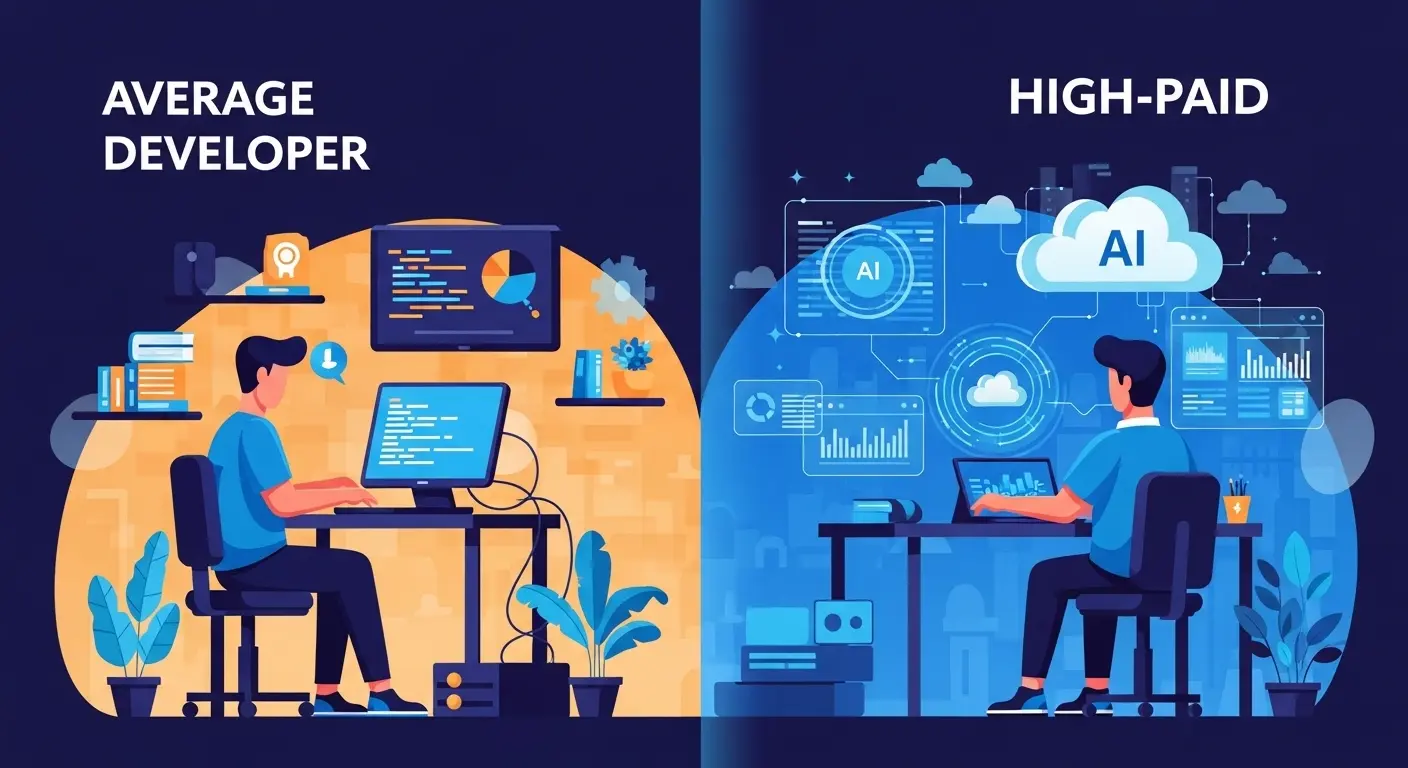
The shift from pure coding to product engineering
The Indian tech landscape has matured significantly over the past half-decade. Gone are the days when companies were simply looking for order-takers—developers who could write code to spec without questioning the underlying premise. The absolute highest premium today is on 'product engineers'—developers who deeply understand the business context and user psychology behind what they are building. Employers are paying top dollar for engineers who intuitively ask 'why are we building this feature?' rather than just 'how do I build it?'
This shift is driven by the realization that code is merely a means to an end, not the end itself. A developer who can identify edge cases in the product requirements, suggest simpler technical approaches that achieve the exact same business goal with half the effort, and understand user behavioral metrics is vastly more valuable than a developer who only focuses on clean syntax and optimized algorithms. The ability to bridge the gap between technical execution and high-level business strategy is a rare and highly compensated skill.
In modern technical interviews, this capability is explicitly evaluated through system design questions that incorporate product constraints and business trade-offs. Can you design a scalable architecture while keeping infrastructure costs low enough to maintain profit margins? Can you balance time-to-market pressure with the accumulation of technical debt? Engineers who consistently demonstrate this product-first mindset are often leveled higher immediately and offered compensation packages that reflect their direct impact on the company's bottom line.
To develop this skill, you must start looking beyond your immediate Jira ticket. Make an effort to understand the broader product roadmap, talk to product managers about the user feedback they are receiving, and familiarize yourself with the core metrics your company tracks, whether that is daily active users (DAU), conversion rates, or average revenue per user (ARPU).
Cloud cost optimization and FinOps
As cloud usage has exploded globally, so have the corresponding monthly cloud bills. For many Indian startups and large enterprises alike, AWS, GCP, or Azure costs now represent one of their absolute largest operational expenses, second only to payroll. Consequently, engineering leadership is no longer just focused on uptime, latency, and performance; they are intensely focused on unit economics and profitability.
The skill of building efficient, cost-aware architectures—often formalized under the discipline of FinOps (Financial Operations)—is commanding a massive market premium. An engineer who can refactor a monolithic microservice to reduce compute costs by 30%, or optimize database queries to lower read/write expenses across billions of rows, effectively pays for their own salary multiple times over every single year.
This level of impact requires a deep, nuanced understanding of cloud pricing models, right-sizing compute instances, utilizing spot instances effectively for non-critical workloads, and designing data storage strategies that perfectly balance access speed with long-term storage cost. It is no longer enough to just know how to deploy a scalable application; you must know how to deploy it profitably.
Candidates who can highlight specific, quantified examples of cost optimization on their resumes—such as 'Reduced monthly AWS bill by $5,000 by optimizing EC2 instances and implementing aggressive S3 data lifecycle policies'—instantly stand out to hiring managers who are heavily focused on the bottom line. Showing that you treat company money as carefully as code architecture makes you a high-value asset in any economic climate.
Applied Artificial Intelligence and LLM Integration
The initial hype cycle surrounding Artificial Intelligence has firmly transitioned into the practical implementation phase. Companies aren't just looking for theoretical AI researchers with PhDs to publish papers; they desperately need hands-on software engineers who can integrate Large Language Models (LLMs) into existing consumer and enterprise products to solve real business problems. This rapidly growing field is known as 'Applied AI.'
The premium skills within this domain include advanced prompt engineering, building highly accurate Retrieval-Augmented Generation (RAG) pipelines, fine-tuning open-source models on proprietary company data, and understanding how to deploy these AI features securely, quickly, and cost-effectively. You need the practical ability to use abstraction tools like LangChain, LlamaIndex, and various vendor APIs (OpenAI, Anthropic) to create tangible user value.
Furthermore, as AI features become more prevalent and user-facing, the ability to build 'evals' (evaluation frameworks) to accurately measure the reliability and safety of AI outputs is becoming a critical bottleneck. Companies need to know that their AI features will not hallucinate damaging information to users, and engineers who can build robust, automated testing suites for stochastic models are in incredibly high demand.
If you are a traditional backend, frontend, or full-stack engineer, adding applied AI integration skills to your repertoire is unequivocally one of the fastest and most reliable ways to increase your market value and command a premium salary in 2025. It acts as a massive multiplier on your existing software engineering foundation.
Security Engineering and DevSecOps
With increasing and stringent regulatory scrutiny (such as the Digital Personal Data Protection Act in India and GDPR globally) and a rising number of highly publicized, brand-destroying data breaches, security is no longer an afterthought relegated to a separate team. It has definitively shifted 'left' in the software development lifecycle.
Employers are paying a significant premium for engineers who actively practice DevSecOps—the discipline of integrating security practices and automated testing directly into the CI/CD pipeline from day one. This includes setting up automated vulnerability scanning, conducting secure code reviews, and designing architectures with strict 'least privilege' access controls baked in.
Beyond just ticking compliance boxes, there is a rapidly growing need for engineers who understand the nuances of privacy engineering. How do you design systems that proactively minimize data collection while still providing the necessary business value? How do you implement robust data anonymization and encryption techniques without crippling system performance? These are complex technical challenges that require specialized knowledge and foresight.
Engineers who can confidently navigate the often-conflicting intersection of rapid feature delivery and maintaining a robust, impenetrable security posture are indispensable to modern tech companies. Building secure systems proactively is always exponentially cheaper than dealing with the catastrophic fallout of a data breach retroactively.
Cross-cultural communication and remote collaboration
While hard technical skills form the necessary baseline, the 'soft' skill commanding the highest overall premium in the modern workplace is the ability to operate effectively in distributed, asynchronous, and cross-cultural teams. As top Indian talent becomes increasingly integrated into global engineering organizations (often interacting daily with counterparts in the US, Europe, or Australia), strong, proactive communication is entirely non-negotiable.
This capability goes far beyond simply speaking fluent English. It means possessing the ability to write crystal-clear, concise technical documentation, comprehensive design documents (RFCs), and highly contextual pull request descriptions. It means knowing how to communicate complex, nuanced technical concepts to non-technical stakeholders—like marketing or sales teams—without using jargon or talking down to them.
In a remote or hybrid setting, the engineer who writes a detailed, context-rich Slack message or Jira ticket update effectively saves the entire team hours of frustrating back-and-forth communication. The engineer who proactively flags project risks early and explicitly manages stakeholder expectations builds immense trust across time zones. Visibility and clarity are key when you aren't sitting at the desk next to your manager.
Companies explicitly test for these communication traits during the behavioral rounds of the interview process. They assess your ability to explain your past architectural decisions clearly, your responsiveness, and how gracefully you handle ambiguity. An engineer with solid technical skills and exceptional communication abilities will almost always secure the offer over an engineer with brilliant technical skills but poor communication habits.
Data Engineering and Pipeline Architecture
While data science and machine learning were the darlings of the previous decade, the current market reality is much more pragmatic: companies have collectively realized they cannot build effective AI, or even reliable business analytics, without solid, scalable data infrastructure. The premium has decisively shifted toward the foundational discipline of Data Engineering.
Companies desperately need engineers who can build robust, fault-tolerant ETL/ELT pipelines, manage massive, distributed data lakes, and mathematically ensure data quality at petabyte scale. Tools like Apache Spark, Kafka, Airflow, Snowflake, and dbt are no longer considered niche skills; they are the core infrastructure powering the modern enterprise.
The true value lies in making messy, unstructured data usable, fast, and completely reliable for the rest of the organization. If a highly-paid data scientist builds a brilliant predictive model based on dirty, delayed, or inaccurate data, the output is entirely useless. The data engineer prevents this massive waste of resources by guaranteeing the strict integrity of the data supply chain.
Professionals who can seamlessly combine strong backend software engineering principles (like CI/CD, unit testing, and rigorous version control) with modern data processing frameworks command some of the absolute highest salaries in the Indian tech market today. It is the foundational layer that enables every single other data-driven initiative to succeed.

Zaprill Team
Market Research
Providing market-leading insights on career strategy, technical compensation, and negotiation.
Recommended for you
More insights to help you navigate your career and market value.

Navigating Tech Career Progression: IC vs. Engineering Manager in India
Should you stay on the Individual Contributor (IC) track or pivot to Engineering Management (EM)? Here is a data-backed breakdown of the salary, impact, and skill differences in India.

How to Answer 'What is Your Expected Salary?' Without Losing Leverage
The expected salary question is a trap. Here is the step-by-step psychological framework to handle it effectively and maximize your offer.

Average software engineer salary in India by city (2026 data)
A city-by-city breakdown of software engineer salaries in India in 2026, covering Bangalore, Hyderabad, Pune, Mumbai, Chennai, and Delhi NCR.