
ATS keywords: how to get your resume past applicant tracking systems
A practical guide to finding and using the right ATS keywords in your resume to pass automated filters and improve your chances of getting a human review.

Zaprill Team
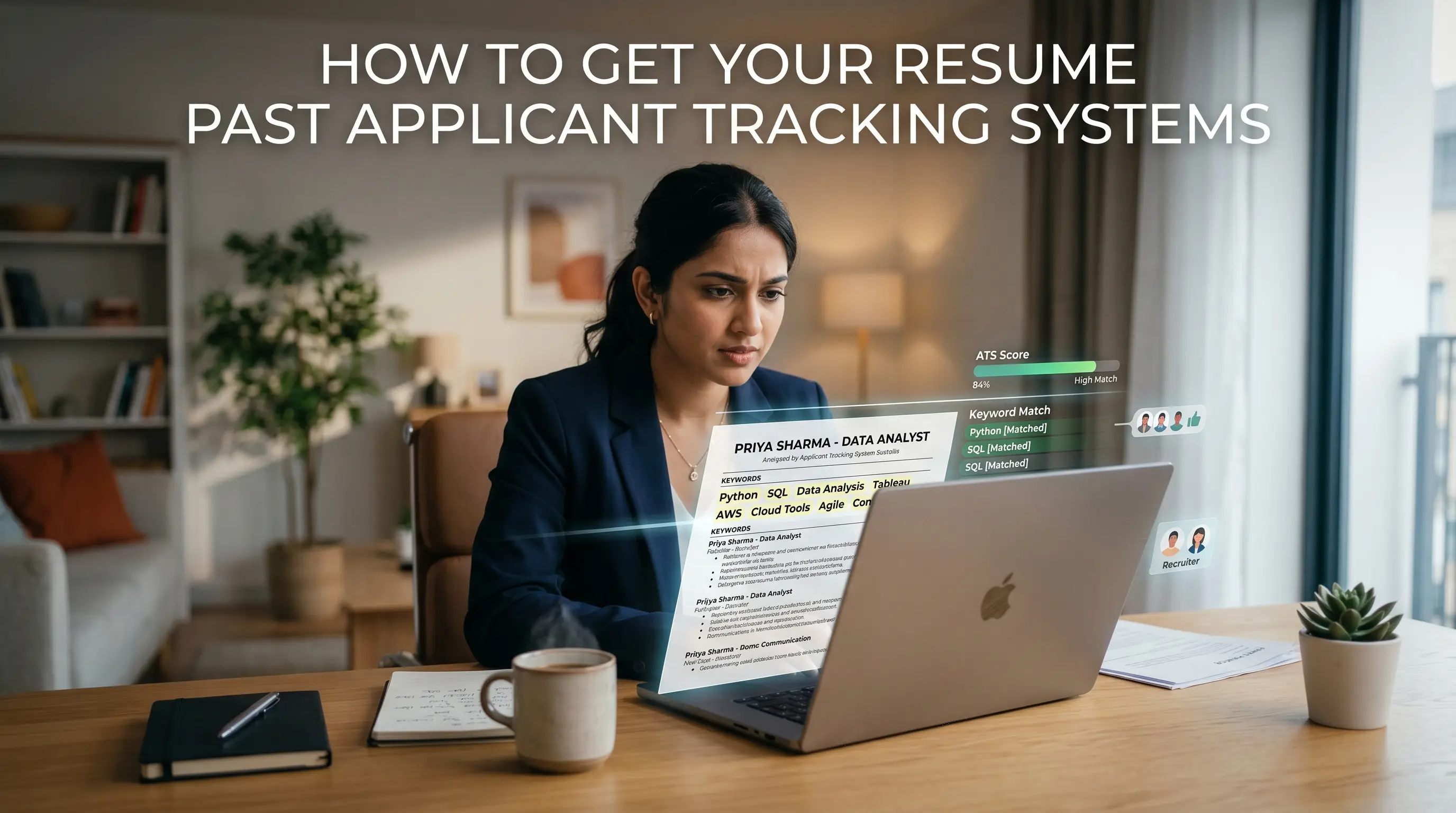
Understanding the ATS Parsing Engine
To successfully and predictably optimize your resume with keywords, you must first deeply understand exactly how a modern Applicant Tracking System (ATS) actually functions. An ATS is absolutely not a highly intelligent, empathetic AI that reads your resume like a human hiring manager. It is fundamentally a very blunt, highly literal parsing engine. When you upload your meticulously crafted PDF or Word document, the ATS aggressively strips away all the beautiful formatting, reads the raw, underlying text, and attempts to categorize the scattered data into specific, rigid database fields: Name, Education, Experience, and Skills.
Once the text is completely parsed, the ATS mechanically compares the contents of your resume against the specific, exact job description provided by the employer. It assigns a strict 'match score' or ranking based heavily on the frequency and exactness of keyword overlap. If the job description explicitly lists 'Project Management' and your resume only says 'Managed Projects,' some older, highly rigid systems will completely fail to register the match, significantly lowering your overall ranking score.
This mechanical reality means that sending generic, undifferentiated resumes to hundreds of different jobs is almost mathematically guaranteed to fail the automated ATS screen. To successfully pass the robotic gatekeeper, your resume must be highly customized and ruthlessly optimized for the specific, exact terminology used in the exact job description you are actively applying for.
The ultimate goal is not to maliciously trick the system; the goal is to speak the exact, literal language the system has been explicitly programmed to look for. If you do not use the employer's exact vocabulary, you are statistically invisible to the algorithm and your resume will automatically be filed in the rejection database.
Identifying the High-Value Keywords
The absolute first crucial step in deep resume optimization is identifying which specific keywords actually matter. Not all words in a verbose job description carry equal algorithmic weight. You must learn to ruthlessly extract the critical 'hard skills' and 'core competencies' from the inevitable, fluffy corporate jargon.
Start by actively scanning the 'Requirements' or 'Qualifications' section of the job posting. Look aggressively for specific nouns: enterprise software programs (e.g., Salesforce, Jira, Figma), programming languages (e.g., Python, C++, Go), project methodologies (e.g., Agile, Scrum, Six Sigma), and highly specific industry terminology (e.g., B2B SaaS, HIPAA compliance, SEC reporting). These are your primary, highest-value keywords that you must include.
Next, carefully scan the 'Responsibilities' section of the posting. Look for action-oriented keywords and core behavioral competencies. If the description repeatedly mentions 'cross-functional collaboration,' 'aggressive stakeholder management,' or 'complex budget forecasting' multiple times, these are critical secondary keywords that the ATS is highly likely actively tracking and scoring.
Create a dedicated master list of these top 10 to 15 core keywords before you even open your resume file. Your immediate, primary objective is to ensure that every single one of these terms naturally appears at least once, and ideally multiple times in entirely different contexts, throughout your resume document. This structured approach to keyword harvesting is what separates a passive applicant from a highly strategic candidate.
Natural Integration vs. Keyword Stuffing
A massive, fatal mistake many desperate or misinformed candidates make is 'keyword stuffing'—randomly pasting a massive, comma-separated list of keywords at the very bottom of the resume, or worse, hiding them entirely by making the text white. Modern, cloud-based ATS systems are highly sophisticated and easily, instantly detect these cheap, outdated tricks, often automatically flagging the profile as spam or rejecting it entirely.
Furthermore, even if the aggressive keyword stuffing miraculously bypasses the initial ATS screen, the resume will eventually be read by a highly critical human recruiter. If the human reader sees a bizarre, unnatural list of buzzwords that do not make logical sense in the context of your experience, they will instantly reject you for poor communication and a blatant lack of professional integrity.
The only correct, sustainable strategy is natural, contextual integration. You must weave the exact required keywords organically and seamlessly into your professional summary, your dedicated 'Skills' section, and most importantly, the actual bullet points under your work experience. Do not just blindly list the keyword; prove definitively that you used it to achieve a measurable business result.
For example, instead of just lazily listing 'Agile' in a massive skills bank at the bottom, write a powerful experience bullet point that clearly says: 'Led daily Agile stand-ups for a distributed team of 12 backend engineers, significantly increasing sprint delivery velocity by 20% over two quarters.' This powerfully proves to the ATS that the critical keyword is present, and proves to the human recruiter that you actually know how to actively apply the skill to generate massive business value.
Formatting for Maximum Machine Readability
Even the absolute most perfectly keyword-optimized resume will fail instantly if the ATS simply cannot read the underlying text. Parsing engines are notoriously, infamously bad at reading complex visual formatting. If you use a highly stylized, beautiful, multi-column template purchased online from a graphic designer, you are severely jeopardizing your chances of being parsed correctly.
Never, ever use complex text boxes, intricately designed tables, or custom graphics to display vital information. The parsing ATS reads strictly left-to-right, top-to-bottom. A visually appealing two-column layout will very often cause the parser to read horizontally across the columns, aggressively jumbling your skills section directly into your experience dates, resulting in complete, unreadable gibberish in the recruiter's database.
Never put highly critical information (like your phone number, email details, or core technical skills) in the literal header or footer of a Word document. Many older, legacy ATS parsers completely ignore document headers and footers, meaning your profile might be inexplicably created without a way for the recruiter to actually contact you.
Stick strictly to a boring, standard, highly predictable single-column layout. Use standard, universally readable fonts like Arial, Calibri, or Times New Roman. Use standard, highly predictable section headers exactly like 'Work Experience,' 'Education,' and 'Skills.' (Do not use cute, clever headers like 'My Professional Journey'). By keeping the visual formatting painfully simple and the keywords highly targeted, you guarantee the machine can perfectly translate your massive value to the human making the final hiring decision.

Zaprill Team
Lead Technical Recruiter
Providing market-leading insights on career strategy, technical compensation, and negotiation.
Recommended for you
More insights to help you navigate your career and market value.

How to Build a Technical Portfolio That Replaces Your Resume
A paper resume tells recruiters what you did, but a technical portfolio shows them how you build. Learn how to construct a portfolio that forces hiring managers to interview you.

5 ATS Formatting Rules You Cannot Afford to Ignore in 2026
Your resume's visual layout is your biggest vulnerability. Discover the 5 rigid ATS formatting rules that determine whether your resume gets read or ignored.

Remote vs In-office compensation trends (2026)
Are companies still paying a premium for in-office talent? How geofencing and cost-of-living adjustments are affecting pay.