
How to Build a Technical Portfolio That Replaces Your Resume
A paper resume tells recruiters what you did, but a technical portfolio shows them how you build. Learn how to construct a portfolio that forces hiring managers to interview you.
Zaprill Team
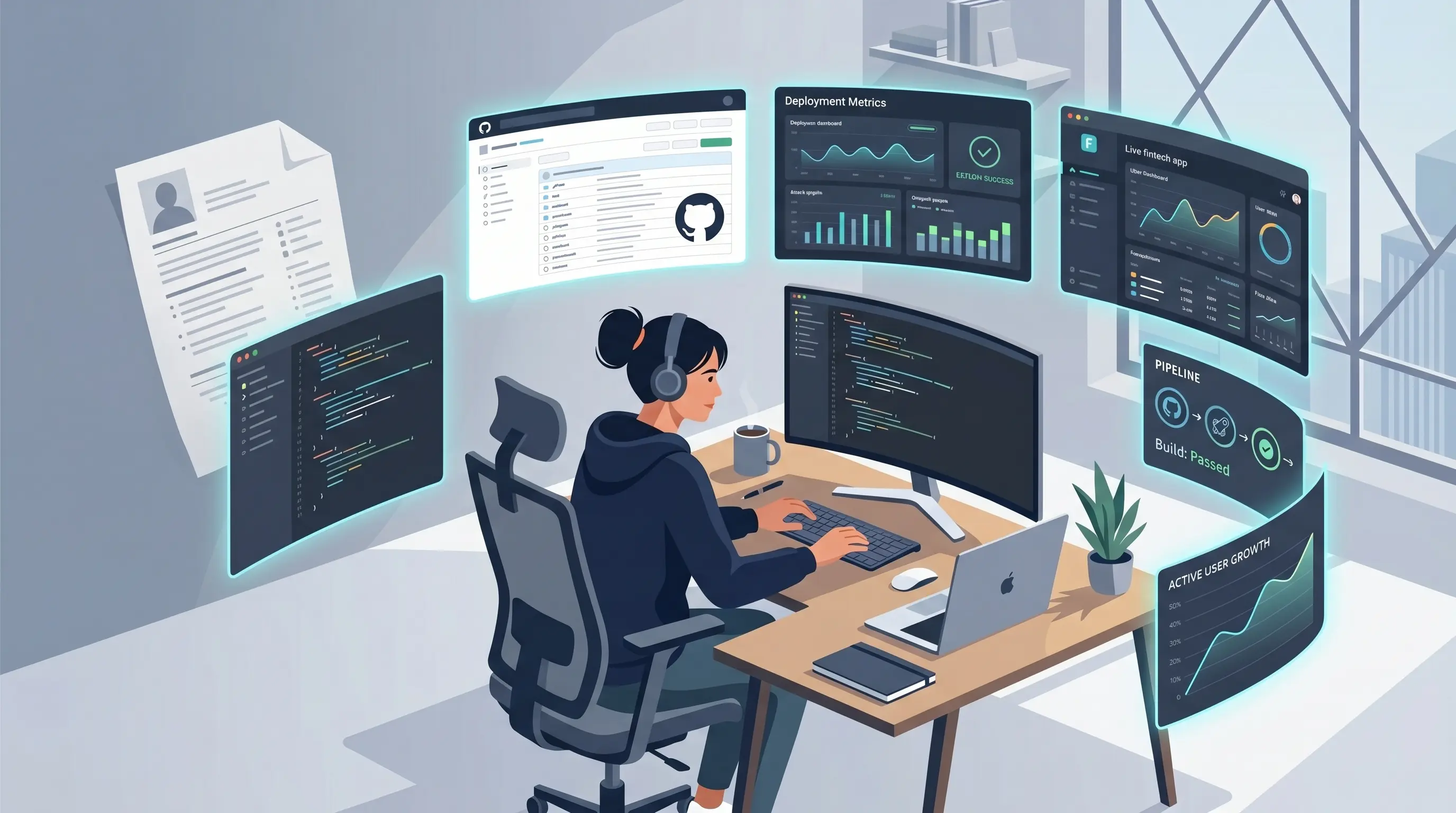
The Credibility Deficit: Why Standard Resumes are Failing
In the current software engineering market, claiming to 'know React, Node.js, and System Design' on a paper resume is no longer sufficient. With the rise of generative AI tools that can instantly draft highly polished, jargon-heavy resume bullets, the credibility of the traditional PDF application has collapsed. Recruiters and hiring managers are facing an unprecedented deluge of identical, keyword-stuffed resumes, leading to high skepticism and aggressive filtering.
When everyone's resume claims they 'designed and optimized scalable microservices', how does a hiring manager verify truth from exaggeration? They look for tangible, undisputed proof of capability: a live, interactive portfolio. A premium personal portfolio acts as a massive multiplier on your candidacy, especially when navigating strict ATS parser limitations that filter out excellent developers. A portfolio shifts you from a passive applicant begging for an interview to an active builder demonstrating real production-grade engineering.
The Anatomy of a Production-Grade Portfolio Project
A great portfolio does not need twenty basic projects. Having ten variations of a simple To-Do List, a basic weather app, or a simple calculator cloned from a YouTube tutorial is actually a negative signal—it tells hiring managers that you can only copy tutorials and lack original architectural thinking. Instead, your portfolio should showcase exactly one or two deep, production-grade applications that solve real-world problems.
A production-grade project must demonstrate software engineering maturity. This means integrating real-time communication (using WebSockets or gRPC), implementing efficient caching layers (with Redis), optimizing database schemas (indexing, query execution plans, and normalization), securing API routes (using JWT with refresh tokens and rate-limiting), and writing comprehensive unit and integration tests (such as Jest or Cypress). For example, rather than building a basic chat app, build a 'Distributed Log Analytics Engine' that processes 5,000 mock log events per second, caches popular searches in Redis, and displays analytics on a real-time dashboard. This shows you understand system constraints, not just syntax.
The Technical Case Study: Explaining Architectural Trade-offs
Having high-quality code is only half the battle; you must also show that you can communicate your engineering decisions. Every major project in your portfolio must be accompanied by a structured technical case study. The entry point to this case study is a beautifully formatted public GitHub repository with an exceptional README.
Your case study must avoid generic descriptions and instead mimic professional engineering design documents. Use standard sections: 1) The Problem Statement (what business or technical challenge were you solving?); 2) System Architecture (include a clear Mermaid.js diagram illustrating data flow between client, server, cache, and database); 3) Tech Stack Justification (explain exactly why you chose PostgreSQL over MongoDB or Go over Node.js for this specific use-case); and 4) Concrete Performance Benchmarks (e.g., 'By implementing Redis connection pooling and indexing the user_id column, I reduced API response latency under load from 420ms to 48ms'). This level of documentation signals to senior engineering leaders that you think like a Principal Engineer.
The Codebase Check: What Hiring Managers Look for in Your GitHub
When an engineering manager clicks your GitHub link from your portfolio, they will perform a rapid, 60-second visual audit of your codebase. They are looking for professional coding hygiene. If they see a messy repository, your chances of a callback drop to zero.
To pass this visual audit, your repository must meet several strict criteria. First, ensure a clean, modular directory structure (e.g., separating routes, controllers, middleware, and services) rather than dumping all code into a single, massive 2,000-line index.js file. Second, maintain clean commit hygiene with descriptive, structured messages (following conventional commits: 'feat: add Redis cache middleware for user profiles') instead of 'update' or 'fix bug'. Third, ensure you have decoupled all sensitive configuration data, like API keys and database credentials, into environment variables (.env files) with a clear .env.example template. Finally, include an automated testing suite that runs on every commit via a simple GitHub Action. This shows you are ready to write reliable, production-ready code.
The Cold Outreach Framework: Bypassing HR Portals Entirely
Once your portfolio and deep projects are live, you can completely bypass the painful black hole of traditional HR application portals. You do not need to submit your resume to a Greenhouse link and hope for the best. Instead, you can leverage your portfolio to conduct highly personalized cold outreach directly to Engineering Managers and Tech Leads on LinkedIn or via email.
To execute this successfully, record a 60-second video walkthrough (using a tool like Loom) of your deployed system. Focus on the most technically impressive aspect—for example, show how your system handles a simulated traffic spike or how you optimized database queries. Send a concise, high-signal message: 'Hi Amit, I saw your team is scaling the payments engine at Razorpay. I recently built a distributed transaction coordinator that handles multi-service rollback scenarios, complete with Jest integration tests and Redis state management. I recorded a 60-second walkthrough of the architecture here [Loom Link] and the open-source code is here [GitHub Link]. I would love to learn if this technical background aligns with any upcoming engineering roles on your team.' Because engineering managers are constantly desperate for self-directed builders who can write production code, this approach has a massive conversion rate, allowing you to bypass traditional resume screen filters. If you are starting out or changing careers, this is the exact playbook to use alongside a guide on writing resumes without experience to land your first break.
Zaprill Team
Lead Technical Recruiter
Providing market-leading insights on career strategy, technical compensation, and negotiation.
Recommended for you
More insights to help you navigate your career and market value.
5 ATS Formatting Rules You Cannot Afford to Ignore in 2026
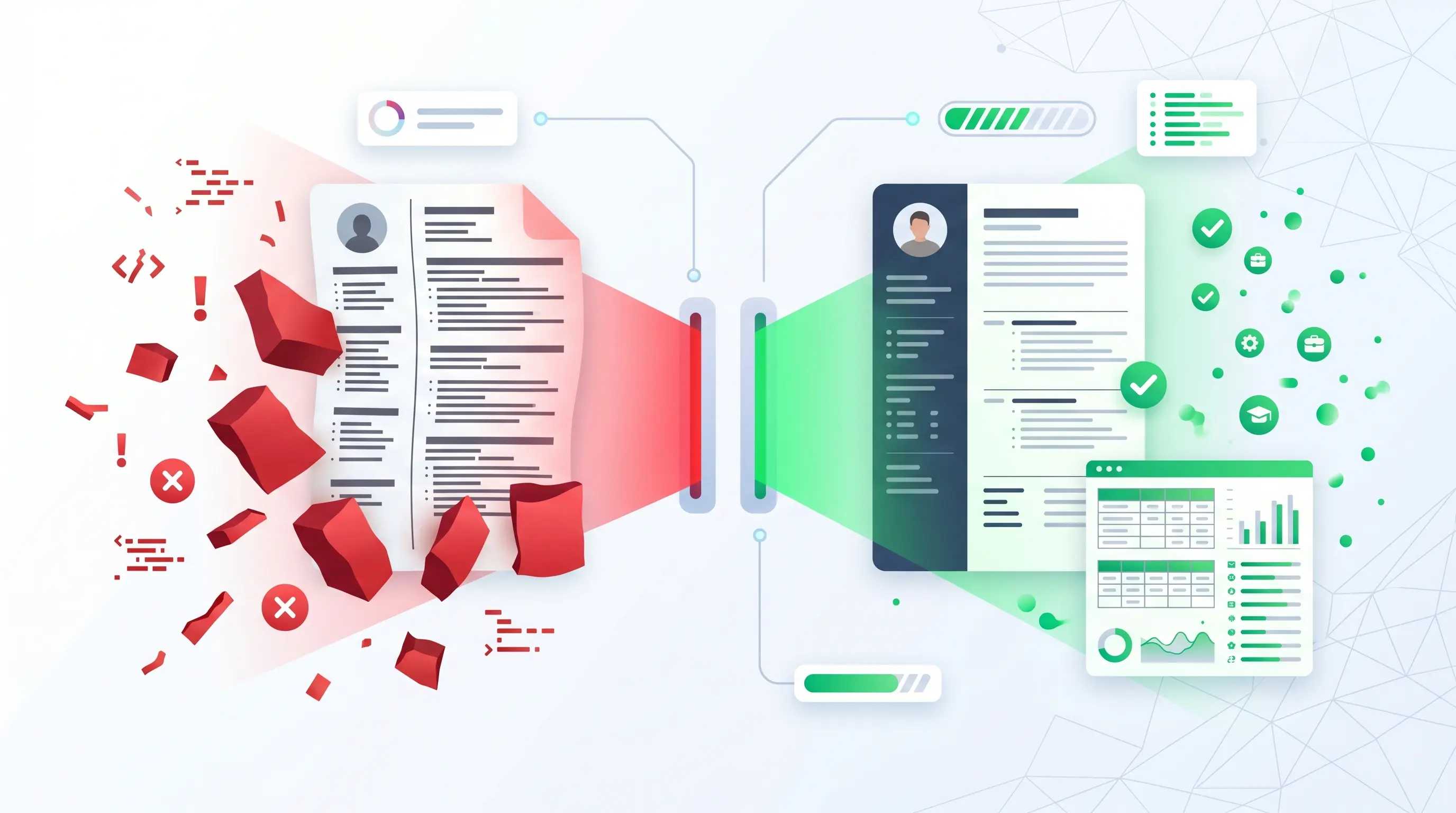
Your resume's visual layout is your biggest vulnerability. Discover the 5 rigid ATS formatting rules that determine whether your resume gets read or ignored.

How to write a resume with no experience (and still get interviews)
A step-by-step guide for freshers, career changers, and new graduates on building a resume that gets past ATS and impresses recruiters even without work history.

How Recent Tech Layoffs Actually Impacted Software Engineering Salaries in India
Despite headlines about hiring freezes and layoffs, top-tier engineering talent is seeing a divergence in compensation. Here is the data-driven reality.