
How to write a resume with no experience (and still get interviews)
A step-by-step guide for freshers, career changers, and new graduates on building a resume that gets past ATS and impresses recruiters even without work history.

Zaprill Team
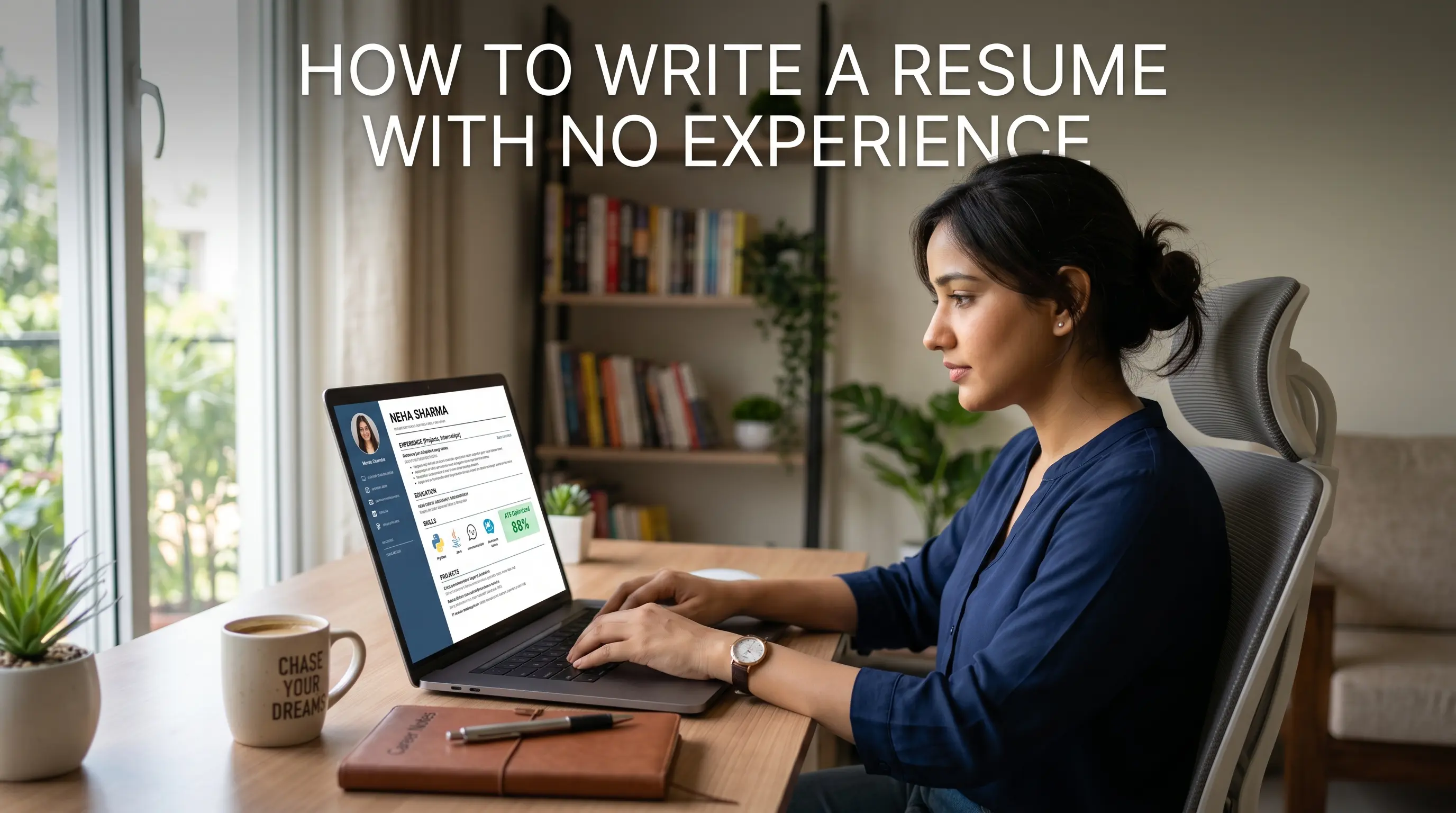
Shifting the Focus from History to Capability
Writing a tech resume when you have absolutely zero formal, paid work experience is arguably one of the most daunting and frustrating tasks for any entry-level candidate. The glaring blank page is intensely intimidating, and the traditional, ubiquitous resume advice—which focuses heavily on describing past job titles, managerial responsibilities, and corporate impact—feels entirely useless and discouraging. However, the fundamental goal of an entry-level resume is not to prove that you have done the exact job before; the true goal is to provide undeniable evidence that you possess the foundational capability, intense drive, and rapid learning aptitude to do the job successfully in the near future.
When you completely lack a chronological corporate employment history, you must fundamentally and strategically shift the entire focus of your resume from 'historical record' to 'demonstrated capability.' You achieve this crucial shift by heavily and prominently prioritizing your relevant education, your complex hands-on coding projects, your specific technical skills, and any relevant extracurricular activities that clearly demonstrate a strong work ethic and complex problem-solving abilities. You are essentially building a compelling narrative that says, 'I may not have a formal corporate title yet, but I have been obsessively building the exact skills you need to solve your problems.'
The visual layout of your resume must aggressively reflect this strategic shift. Instead of placing an empty or irrelevant 'Experience' section at the very top of the page, forcefully lead with a strong, highly objective 'Skills' section, followed immediately by detailed, technically complex 'Projects' or 'Education.' This specific layout visually and psychologically guides the recruiter to evaluate your hard technical abilities and practical code applications before they even notice the lack of a formal job history.
Remember, every single senior principal engineer, group product manager, and lead designer in the industry started with exactly zero experience. Recruiters actively hiring for junior roles explicitly expect a lack of employment history; it is priced into the role. What they absolutely do not tolerate, however, is a lack of effort, a lack of practical self-directed projects, or a poorly formatted, error-ridden document.
The Immense Power of the 'Projects' Section
When you have no formal work experience, your 'Projects' section instantly becomes the absolute most critical, high-stakes part of your resume. This is the exact place where you demonstrate that you can effectively apply theoretical, academic knowledge to solve messy, practical real-world problems. A highly complex, well-documented project section is often vastly more impressive to a hiring engineering manager than a mediocre, six-month corporate internship where the candidate only performed menial bug fixes and wrote basic unit tests.
Do not make the amateur mistake of just vaguely listing the titles of your basic academic assignments. You need to present your independent projects as if they were professional, shipped products. For each major project, strictly use the standard professional bullet point format: what exact problem did you solve, what specific technologies and frameworks did you use, and what was the quantifiable outcome or the specific technical challenge you overcame? For example: 'Architected and built a full-stack e-commerce web application using React and Node.js, implementing highly secure Stripe payment integration and reducing database query times by 40% by meticulously optimizing MongoDB indexes.'
It is absolutely mandatory to include active links to the live, hosted project (if applicable) and the public GitHub repository. A busy recruiter or skeptical hiring manager being able to click a single link and instantly see your clean code structure or a working, polished application is incredibly powerful. It provides immediate, undeniable, and verifiable proof of your technical claims.
If you look at your resume and realize you don't have enough strong, complex academic projects to fill this section, you must stop applying and start building. Actively contribute to open-source software, fiercely compete in hackathons, or simply build robust tools that solve annoying problems in your own daily life. The massive initiative required to design, build, and deploy an independent project from scratch speaks volumes about your intense drive and genuine passion for the engineering craft.
Extracting Maximum Value from Non-Technical Experience
Many entry-level tech candidates make the critical mistake of completely omitting all non-technical jobs (like retail, fast-food hospitality, or basic campus administrative roles) from their tech resumes. While these roles shouldn't dominate the page visually, they are actually incredibly valuable for demonstrating essential, non-negotiable soft skills that modern tech employers desperately need: clear communication, reliable teamwork, graceful conflict resolution, and consistent reliability under pressure.
The crucial trick is to frame these non-technical experiences correctly. Do not focus on the mundane, repetitive daily tasks. Instead, aggressively highlight specific achievements that demonstrate highly transferable skills. If you worked in retail management, don't just say 'Stocked shelves.' Say 'Successfully trained three new employees on complex inventory management software and maintained 100% register accuracy during extremely high-volume, high-stress holiday shifts.' If you were a university teaching assistant, strongly emphasize your ability to communicate highly complex, abstract concepts clearly to diverse audiences.
Extracurricular activities, university tech clubs, and campus leadership roles also firmly fall into this valuable category. If you organized a large campus tech symposium, meticulously managed a budget for a student engineering society, or led a local volunteer initiative, you have clearly demonstrated project management, leadership, and organizational skills. These are critical professional competencies that many technically brilliant entry-level candidates completely lack.
By carefully and strategically framing your non-traditional experiences, you show the recruiter that you are a well-rounded, mature professional who deeply understands how to operate effectively within a team structure, handle immense pressure gracefully, and take initiative without constant supervision.
Mastering the Technical Skills Section for ATS
Your 'Skills' section must be highly optimized for Applicant Tracking Systems (ATS) while remaining incredibly easy for a rushed, human recruiter to scan quickly. Avoid the temptation to include massive, unorganized, comma-separated lists of every single technology you have ever heard of or briefly touched. Instead, categorize your skills logically and cleanly: 'Languages' (e.g., Python, JavaScript, Go), 'Frameworks/Libraries' (e.g., React, Node.js, Spring Boot), and 'Tools/Infrastructure' (e.g., Git, Docker, Kubernetes, PostgreSQL).
Be fiercely, uncompromisingly honest about your actual proficiency levels. If you simply followed one basic YouTube tutorial on AWS deployment, do not list AWS as a core technical skill. The absolute quickest and most embarrassing way to fail a technical interview is to confidently claim expertise in a technology that you cannot intelligently discuss in depth. A significantly shorter list of technologies you know deeply and can defend is infinitely better than a massive list of technologies you barely understand.
Tailor your skills section meticulously for every single job application. Read the specific job description carefully, identify the core, mandatory technologies they require, and ensure those specific keywords are prominently featured near the top of your skills section (assuming you actually possess them). This highly targeted, customized approach significantly increases the statistical chances of your resume surviving the initial, brutal automated ATS screening.
Finally, ensure your formatting is absolutely impeccable. A resume with no formal experience must be visually flawless to communicate competence and professionalism. Use a clean, ATS-friendly single-column layout, standard readable fonts (like Arial or Calibri), and perfectly consistent bullet points. Proofread it relentlessly. A well-structured, completely error-free resume signals to the potential employer that you are highly meticulous and take your professional presentation seriously.

Zaprill Team
Lead Technical Recruiter
Providing market-leading insights on career strategy, technical compensation, and negotiation.
Recommended for you
More insights to help you navigate your career and market value.

How to Build a Technical Portfolio That Replaces Your Resume
A paper resume tells recruiters what you did, but a technical portfolio shows them how you build. Learn how to construct a portfolio that forces hiring managers to interview you.

5 ATS Formatting Rules You Cannot Afford to Ignore in 2026
Your resume's visual layout is your biggest vulnerability. Discover the 5 rigid ATS formatting rules that determine whether your resume gets read or ignored.

The complete guide to tech salary negotiation in India (2026)
A deep dive into the current state of tech compensation in India and how to negotiate your worth in a changing market.